
Joint Injections in Vero Beach, FL

Targeted, Non-Surgical Support for Joint Pain & Mobility

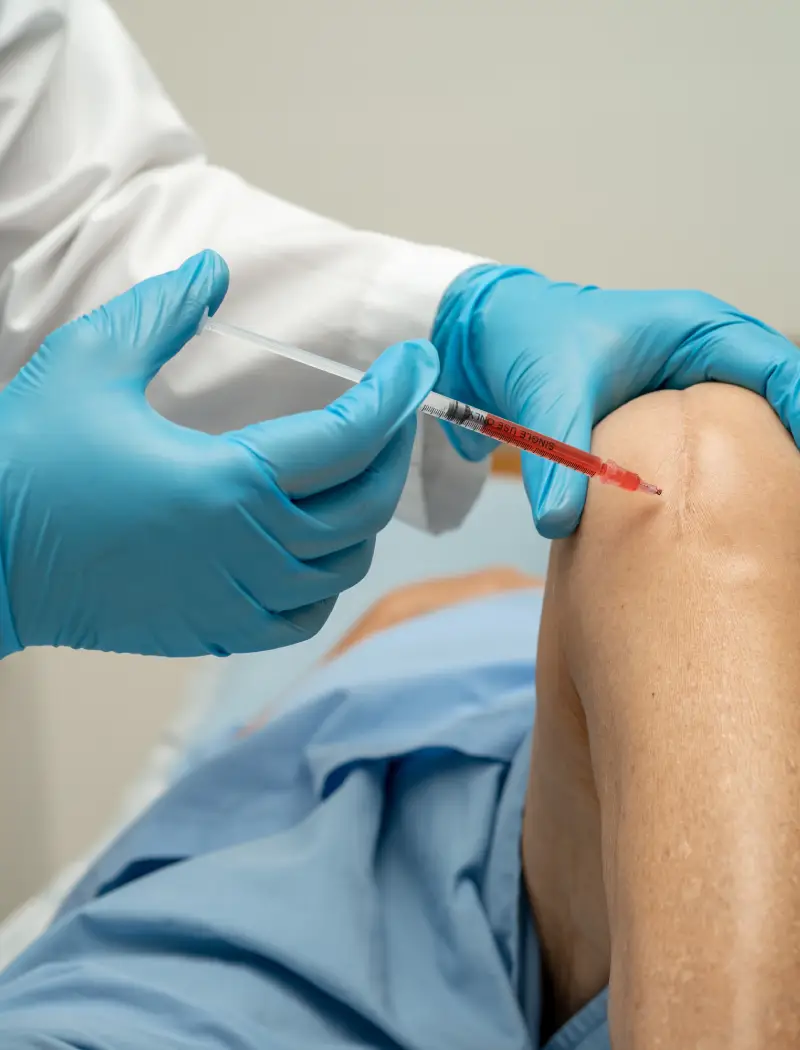
Joint injections are minimally invasive procedures that place medication or another injectable product into or around a joint. Depending on the diagnosis and product used, an injection may be considered to reduce inflammation, provide temporary pain relief, improve lubrication, or support further evaluation and rehabilitation. Common treatment areas include the knees, shoulders, hips, elbows, wrists, and ankles.

Using ultrasound guidance enables us to visualize the joint structure in real time, improving accuracy and helping direct the medication to the area of inflammation or irritation. Joint injections can be part of an integrative treatment plan that may include physical therapy, acupuncture, or regenerative therapies such as PRP or orthobiologics.

What Is IV NAD+ Therapy?
Key Benefits of Joint Injections

Key Benefits of Joint Injections

Potential benefits depend on the diagnosis and injection type. A joint injection may:

  • Provide temporary pain relief
  • Reduce inflammation when an anti-inflammatory medication is used
  • Improve lubrication when an appropriate hyaluronic acid product is used
  • Help some patients participate more comfortably in physical therapy or rehabilitation
  • Provide a non-surgical treatment option for selected conditions
  • Allow needle placement to be visualized when ultrasound guidance is used

Results vary, and not every injection type is appropriate or effective for every joint condition.

Conditions Supported with Joint Injections

Depending on the diagnosis, injection type, and anatomical target, injections may be considered for:

Osteoarthritis

Certain injections may provide short-term symptom relief for selected patients.

Inflammatory joint pain

Corticosteroid injections may be considered when inflammation is contributing to symptoms.

Bursitis

An injection may target an inflamed bursa near a joint rather than the joint space itself.

Tendinitis or tendon-sheath inflammation

Selected injections may be placed around an affected tendon when clinically appropriate.

Persistent joint pain

An injection may be considered after evaluation when symptoms have not improved with initial conservative care.

Certain post-injury symptoms

Treatment depends on the injured structure, diagnosis, imaging findings, and stage of recovery.

Not every type of pain is appropriate for an injection. The provider will determine the anatomical target and proposed injectable product after reviewing your symptoms, examination findings, medical history, and imaging when appropriate.

How Joint Injections Work

How an injection works depends on what is injected and where it is placed:

  • Corticosteroids may reduce inflammation and provide short-term symptom relief.
  • Local anesthetics may provide temporary numbing and can sometimes assist the clinical evaluation.
  • Hyaluronic acid products are intended to supplement joint lubrication, although recommendations and results vary by joint and diagnosis.
  • PRP and other orthobiologic options have different preparation methods, evidence, risks, and regulatory considerations.

When musculoskeletal ultrasound is used, it helps the provider visualize the relevant anatomy and guide needle placement. Ultrasound findings must be considered alongside the examination and other imaging; ultrasound does not always identify the definitive source of pain.

How Joint Injections Work
Safety and Considerations

Safety and Considerations

Joint injections can provide targeted pain relief and support mobility, but benefits and risks vary by injection type and patient. A few things to know before yours:

  • Common effects: Mild soreness may last 24 to 48 hours. A post-injection flare can occur after corticosteroid injections, usually lasting hours rather than days.
  • Steroid limits: Corticosteroids may reduce inflammation, but repeated use can affect cartilage, so treatments are spaced appropriately.
  • Diabetes: Corticosteroid injections can temporarily raise blood glucose. Patients with diabetes should discuss monitoring and medication instructions with the clinician managing their diabetes and follow the individualized plan provided.
  • Not for everyone: Infection, broken skin, certain fractures, avascular necrosis, a known allergy to the injected agent, or some prosthetic joints may affect candidacy.
  • Blood thinners: Tell us what you take so treatment can be planned safely.
  • When to call us: Pain that starts after 48 hours or continues beyond that period should be evaluated.

The Joint Injection Process

Most joint injection appointments take 10–20 minutes and are performed in our Vero Beach office.

Step-by-step:

1

Preparation

We evaluate the joint, identify tender or inflamed structures, and apply ultrasound gel if imaging is planned.

2

Treatment

A small needle delivers the solution directly into the joint space under visual guidance.

3

Sensation

Most patients experience a brief pinch or feeling of pressure.

4

Recovery

Most people return to regular activity the same day. Mild soreness may occur for 24 to 48 hours.

5

Treatment Plan

The number and timing of injections depend on the diagnosis, product used, response, risks, and applicable clinical guidance. Some products may be administered once, while others use a defined series.

Treatment Results and Timing

Improvement usually builds gradually rather than arriving all at once, and timing depends on which injection you receive. Corticosteroids tend to act faster, while hyaluronic acid and regenerative options work more slowly and may last longer.

Typical patterns:

  • Early relief: Often within the first several days
  • Notable improvement: Commonly over the first few weeks
  • Fuller benefit: Typically around the one to two month mark

These are general patterns, not a schedule. Your response depends on the joint, the type of injection, and how long the problem has been present. For chronic or long-standing joint issues, repeat sessions may be recommended.

Treatment Results and Timing
Other Pain Management Services We Offer

Other Pain Management Services We Offer

We also offer a range of non-surgical, evidence-informed treatments.

Candidates for Joint Injections

Joint injections may be appropriate if you have:

  • Persistent joint pain, swelling, or stiffness that has not improved with rest, physical therapy, or over-the-counter medication
  • Pain that limits your mobility or daily activity
  • Arthritis or joint degeneration, where reducing inflammation or adding lubrication may help
  • Recurring irritation from overuse, work, or sport
  • A preference for non-surgical options before considering surgery

We will review your symptoms, imaging results, and medical history to determine which type of injection, such as corticosteroids, hyaluronic acid, PRP, or other regenerative options, is most suitable for your condition.

Candidates for Joint Injections

Why Choose Sikora Integrative Medicine

We provide a comprehensive, patient-focused approach to joint care, ensuring every treatment is tailored to your functional goals and comfort.

What sets us apart:

Why Choose Sikora Integrative Medicine
  • Physician-led by a PM&R specialist. Dr. Alita Sikora, MD, is board-certified in Physical Medicine and Rehabilitation, the specialty whose scope covers joint injections, and has practiced in Vero Beach since 2007.
  • Ultrasound-guided treatment: Rochine Pierre, PA-C, performs joint injections using in-office musculoskeletal ultrasound to help guide treatment based on exam and imaging findings.
  • Multiple injection options: Corticosteroids, hyaluronic acid, PRP, and other regenerative therapies may be considered based on your diagnosis, goals, and activity level.
  • Safety-focused care: We review your symptoms, imaging, and medical history to determine whether an injection is appropriate and which type fits best.
  • Clear guidance and follow-up: Our team explains your options and expected outcomes, then provides attentive follow-up to support joint health and progress.
  • Recognized by patients: Dr. Sikora is a Patients' Choice 5-Year Honoree and Castle Connolly Regional Top Doctor 2020.

Frequently Asked Questions

Does a joint injection hurt?

Most patients feel a brief pinch or a sense of pressure. Injections often include a local anesthetic, which can give immediate relief that wears off after a few hours. Mild soreness in the first 24 to 48 hours is normal.

How long does a joint injection last?

It depends on the injection. Corticosteroid relief commonly lasts several weeks to a few months. Hyaluronic acid, such as Hyalgan, takes longer to take effect, but the benefit can last longer.

How many joint injections will I need?

Some patients do well with a single injection, while others benefit from a short series. Hyalgan is given as a course of three to five weekly injections. Corticosteroid injections are spaced rather than repeated frequently, since cartilage thinning has been shown with overuse. We set the interval based on your joint and your response.

Can I exercise after a joint injection?

Light activity is usually fine. Avoid strenuous or high-impact exercise for 24 to 48 hours, and be especially cautious with weight-bearing joints such as knees and hips.

What if the injection doesn't help?

A limited response is useful information because it tells us where the pain is actually coming from. From there, we may consider a different injectate or another approach we offer, such as shockwave therapy, perineural injections, or regenerative options.

Are joint injections the same as steroid injections?

Not always. Corticosteroids are one option. Others include Hyalgan hyaluronic acid, PRP, and other orthobiologics, selected based on your diagnosis and goals.

Does insurance cover joint injections?

Coverage varies. Corticosteroid and hyaluronic acid injections are more commonly covered than regenerative options, whereas PRP and stem cell treatments are typically out-of-pocket. Financing through M Lend Financial is available.

Schedule Your Consultation Today

At Sikora Integrative Medicine, our Vero Beach team can help you understand your treatment options and whether shockwave therapy may be appropriate for your needs. Financing through M Lend Financial is available to help make treatment costs more manageable over time.

Disclaimer: This information is provided for educational purposes only and is not intended to be medical advice. It should not be used to diagnose, treat, or cure any condition. Always consult your healthcare provider for personalized guidance. Services are available exclusively to Florida residents.